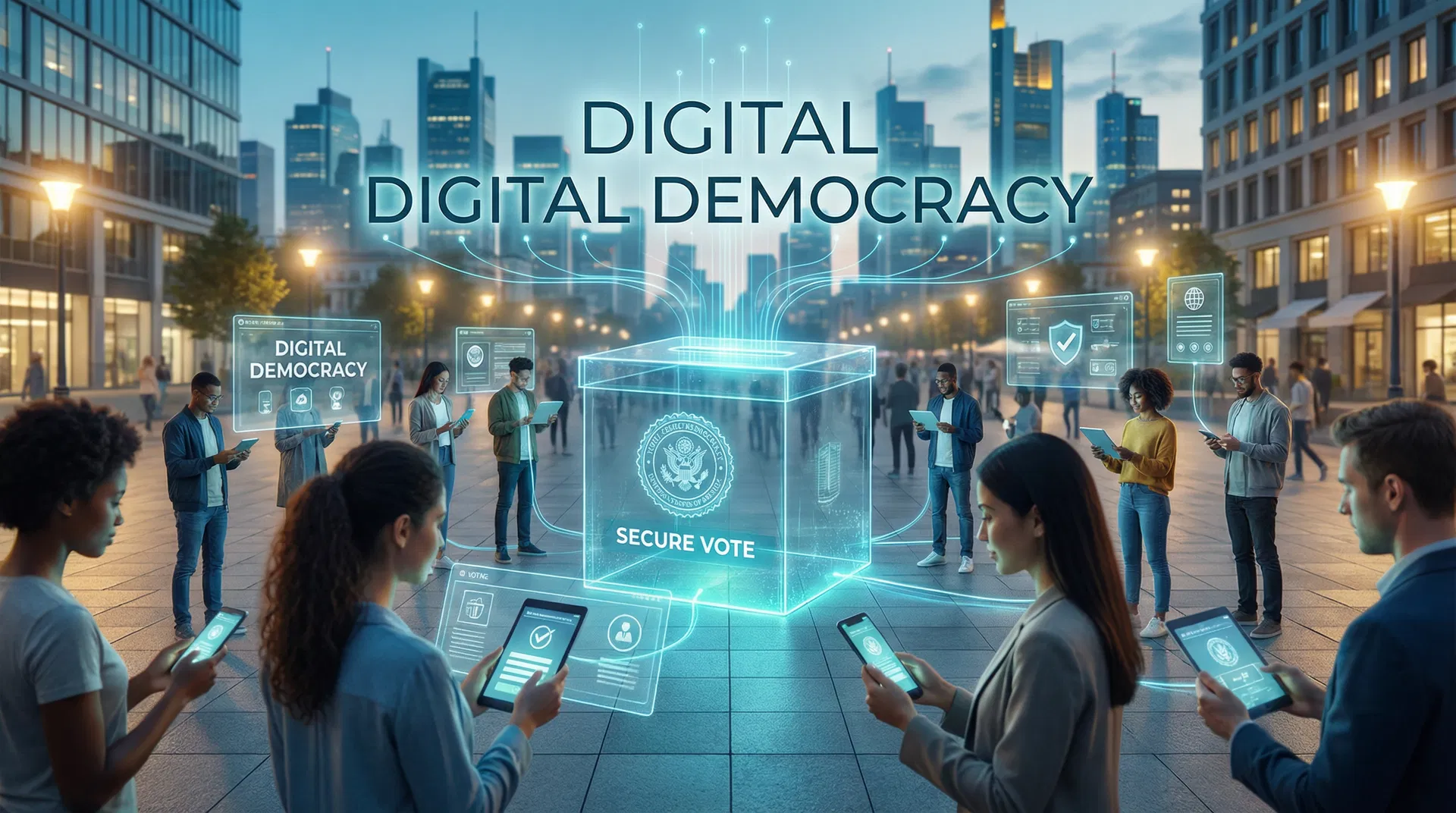
Digital Democracy: Can Technology Save Politics From Itself?
In an era defined by rapid technological advancement, the foundational principles of democracy are being re-examined through a digital lens. The internet and associated technologies have created unprecedented opportunities for citizen engagement, governmental transparency, and political discourse. Yet, this same digital revolution has also unleashed powerful new threats, from sophisticated disinformation campaigns to the algorithmic entrenchment of partisan divides. This raises a critical question for our time: can technology save politics from itself? This article explores the complex and often contradictory relationship between technology and democracy, examining pioneering case studies, proposed innovations, and the ever-present dangers that accompany our increasingly digital public square.
The Estonian Model: A Digital Republic
Estonia, a small Baltic nation, has emerged as a global leader in digital governance, offering a glimpse into what a fully digitized democracy might look like. Since regaining independence in 1991, Estonia has systematically built a digital society, known as "e-Estonia." Today, nearly all government services are accessible online, from filing taxes to accessing health records. The cornerstone of this system is a secure digital identity, which every citizen possesses, enabling them to interact with the state seamlessly and securely. [1]
The backbone of e-Estonia is X-Road, a decentralized, open-source data exchange layer that allows the nation's various public and private sector e-service information systems to link up and function in harmony. This infrastructure ensures that data is never duplicated; instead, it is stored securely where it is created and accessed only when necessary and authorized. This level of integration not only streamlines bureaucracy but also fosters a high degree of transparency, as citizens can log in to see exactly which government agencies have accessed their personal data.
One of the most notable innovations is Estonia's i-Voting system, which allows citizens to cast their ballots from any internet-connected computer in the world. First introduced in 2005, i-Voting has been used in multiple national and local elections, with a growing percentage of the electorate choosing to vote online. In the 2023 parliamentary elections, more than half of all votes were cast digitally. Proponents argue that i-Voting increases accessibility and convenience, potentially boosting voter turnout, especially among younger demographics and expatriates. However, the system is not without its critics, who raise concerns about security, vote-tampering, and the potential for coercion. [2]
Beyond voting, Estonia's e-Residency program offers a government-issued digital identity to anyone in the world, allowing them to start and run an EU-based company online. This initiative has attracted thousands of global entrepreneurs, further cementing Estonia's reputation as a digital pioneer. While the Estonian model is often lauded for its efficiency and transparency, it also highlights the "paradox of trust" – the need for citizens to have immense faith in the integrity and security of the digital infrastructure that underpins their government. [3]
Taiwan's Experiment: Radical Transparency and Civic Tech
In contrast to Estonia's top-down approach, Taiwan has cultivated a vibrant, bottom-up digital democracy movement. A key figure in this movement is Audrey Tang, Taiwan's first digital minister, a former civic hacker who has championed the use of technology to foster collaboration and consensus. At the heart of Taiwan's digital democracy is the g0v (gov-zero) movement, a community of civic-minded programmers and activists who work to create tools for government transparency and citizen participation. [4]
One of the most significant outcomes of this movement is vTaiwan, an open consultation process that brings together citizens, experts, and government officials to deliberate on new legislation. Using a platform called Polis, vTaiwan facilitates large-scale conversations, identifying areas of consensus and disagreement. Polis is an AI-powered tool that maps out participants' opinions in real-time, grouping people with similar views and highlighting statements that bridge divides between different groups. This process has been used to shape policy on a range of issues, from Uber's entry into the Taiwanese market to online alcohol sales. The success of vTaiwan demonstrates the potential of "civic tech" to create more inclusive and responsive forms of governance, moving beyond simple majority rule to find genuine consensus. [5]
Furthermore, Taiwan has effectively utilized digital tools to combat misinformation without resorting to censorship. During the COVID-19 pandemic and various election cycles, the government collaborated with civic hackers to create rapid-response fact-checking mechanisms. By employing a strategy of "humor over rumor," they quickly countered false narratives with engaging, factual content, demonstrating that digital democracy can be resilient in the face of coordinated disinformation campaigns.
The Blockchain Promise: A Secure Future for Voting?
The search for a secure and transparent method of digital voting has led many to explore the potential of blockchain technology. In theory, a blockchain-based voting system could provide a tamper-proof, publicly verifiable ledger of votes, eliminating the possibility of fraud and increasing public trust in elections. Proponents envision a system where every vote is recorded as a transaction on a distributed ledger, ensuring its integrity and immutability. [6]
However, the reality of blockchain voting is far more complex. Cryptography and security experts have raised serious concerns about the feasibility of such systems. A report from the MIT Digital Currency Initiative, for instance, argues that blockchain voting systems are not only vulnerable to the same cyberattacks as other forms of online voting but may also introduce new security risks. [7] The challenges of ensuring voter anonymity, preventing coercion, and securing the endpoints (i.e., the devices on which votes are cast) remain significant hurdles.
Moreover, the complexity of blockchain systems can itself be a barrier to trust. If the average citizen cannot understand how their vote is recorded and counted, their faith in the electoral process may diminish, regardless of the system's cryptographic security. While blockchain technology holds promise for many applications, its use in public elections remains a contentious and high-stakes proposition, with many experts advising that paper trails remain essential for verifiable elections.
AI-Powered Citizen Engagement
Beyond voting and consultation, artificial intelligence is increasingly being deployed to enhance citizen engagement. Local governments are experimenting with AI chatbots to answer citizen queries, streamline service requests, and gather feedback on public initiatives. These tools can make government more accessible, providing 24/7 assistance and breaking down language barriers through real-time translation.
More sophisticated AI applications involve analyzing large volumes of public feedback to identify emerging trends and concerns. Natural language processing algorithms can sift through thousands of public comments on proposed regulations, summarizing key themes and sentiments for policymakers. This allows governments to process public input more efficiently and comprehensively than ever before. However, the use of AI in this context also raises questions about bias and representation. If the algorithms used to analyze public sentiment are flawed, or if certain demographic groups are less likely to engage with digital platforms, the resulting policy decisions may be skewed.
The Dark Side of Digital Democracy
For all its potential to enhance democracy, technology also has a dark side. The proliferation of "deepfakes" – AI-generated videos that can make it appear as if someone said or did something they never did – poses a grave threat to political discourse. These highly realistic forgeries can be used to spread disinformation, defame candidates, and erode public trust. The Brennan Center for Justice has warned that deepfakes could be a "perfect storm" for electoral manipulation, particularly when released shortly before an election, leaving little time for fact-checking or rebuttal. [8]
More broadly, the spread of disinformation and "fake news" through social media has become a major challenge for democracies worldwide. Foreign and domestic actors can use social media platforms to sow discord, amplify partisan divisions, and manipulate public opinion. The algorithmic amplification of sensational and emotionally charged content can create "echo chambers" and "filter bubbles," where citizens are only exposed to information that confirms their existing beliefs, leading to increased political polarization.
This algorithmic polarization is a significant challenge to the deliberative process that is essential for a healthy democracy. When citizens inhabit entirely different information ecosystems, finding common ground becomes increasingly difficult. The very platforms that were once hailed as democratizing forces are now frequently criticized for prioritizing engagement and profit over the health of the public sphere.
Conclusion: A Double-Edged Sword
Technology is not a panacea for the challenges facing modern democracies. As the cases of Estonia and Taiwan illustrate, it can be a powerful tool for increasing transparency, fostering citizen engagement, and making government more efficient and responsive. However, the promise of digital democracy is tempered by the significant risks of cyberattacks, disinformation, and the erosion of privacy. The dream of a secure and universally trusted blockchain voting system remains, for now, a distant one, and the rise of AI brings both new opportunities for engagement and new threats to truth.
The path forward requires a nuanced and critical approach. Rather than viewing technology as a savior or a villain, we must see it as a double-edged sword that must be wielded with care and foresight. Building a healthier digital democracy will require not only technological innovation but also a renewed commitment to civic education, media literacy, and the fundamental principles of democratic discourse. We must design digital platforms that prioritize deliberation over division, and we must equip citizens with the critical thinking skills necessary to navigate an increasingly complex information landscape. The future of democracy may not be determined by the code we write, but by the values we embed within it and the wisdom with which we apply it. Ultimately, technology can facilitate the democratic process, but it is the active, informed participation of citizens that sustains it.
Citations
- e-Estonia. (n.d.). e-Estonia. Retrieved from https://e-estonia.com/
- Su, M. H. (2023). A case study of Taiwan. European Partnership for Democracy. Retrieved from https://epd.eu/content/uploads/2023/07/Case-Study-Taiwan.pdf
- Park, S., Specter, M., & Rivest, R. L. (2021). Going from bad to worse: from Internet voting to blockchain voting. Journal of Cybersecurity, 7(1), tyaa025. https://doi.org/10.1093/cybersecurity/tyaa025
- Chesney, R., & Citron, D. (2019). Deep Fakes: A Looming Challenge for Privacy, Democracy, and National Security. SSRN Electronic Journal. https://doi.org/10.2139/ssrn.3213395
- Howard, P. N. (2020). Lie machines: How to save democracy from troll armies, deceitful robots, junk news operations, and political operatives. Yale University Press.
- Sunstein, C. R. (2017). #Republic: Divided democracy in the age of social media. Princeton University Press.
- Tang, A. (2024, December 19). Taiwan's digital revolution: Healing polarization and empowering citizens. Harvard Business School. Retrieved from https://www.hbs.edu/bigs/taiwans-digital-revolution-audrey-tang
- The Brennan Center for Justice. (2024, March 26). The Danger of Deepfakes to Democracy. Retrieved from https://www.brennancenter.org/our-work/analysis-opinion/danger-deepfakes-democracy
richyryanofficial.com Editorial Team
© 2026 richyryanofficial.com — All perspectives are valued.